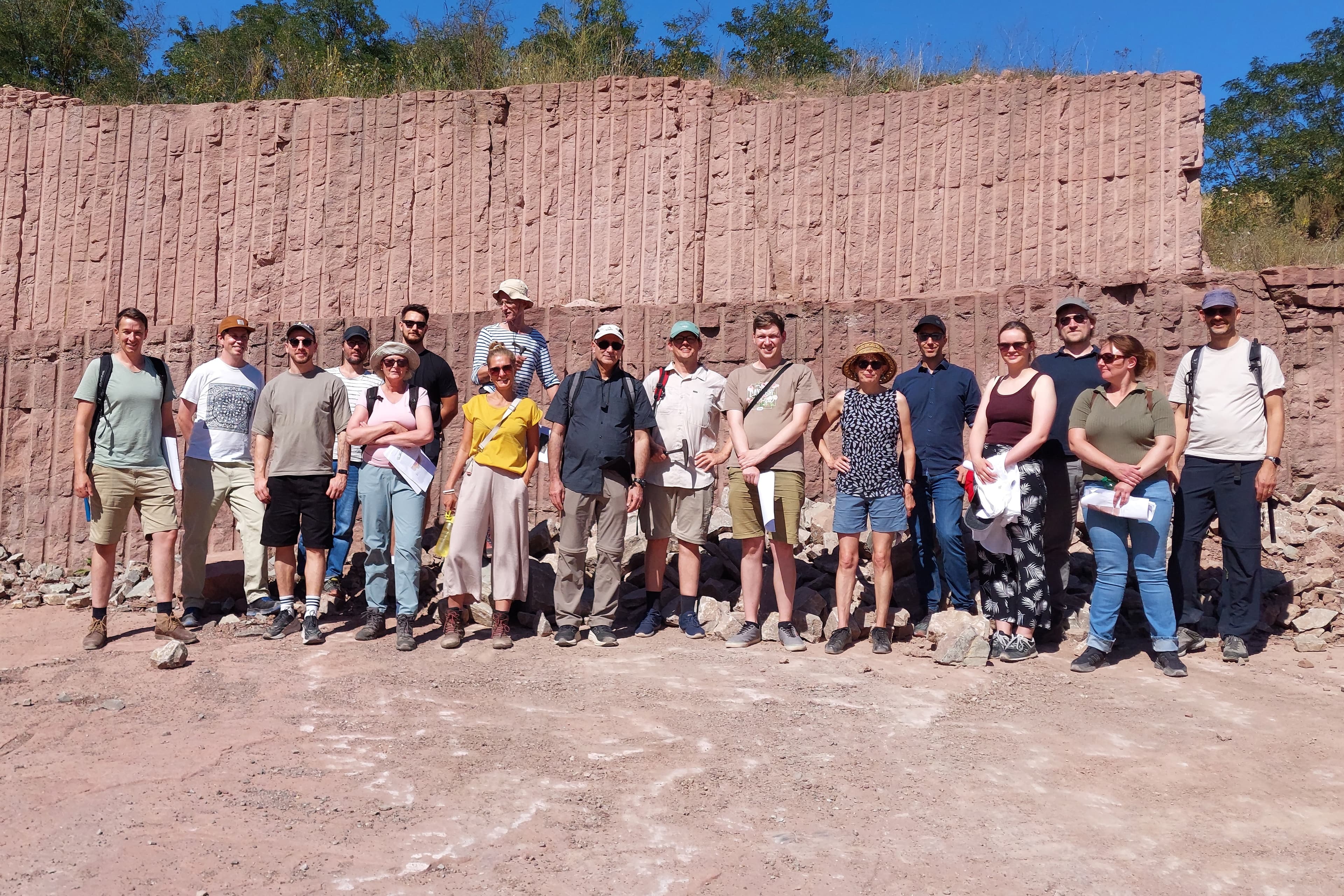
Project group at the Sventesius quarry near Altenhausen: the rocks visible here occur further north in the Altmark only at depths of three to five kilometers. In the quarry, researchers can study how thermal water flows through the sandstones and where lithium might be bound within the rock. — © Fretzdorff/PTJ
Rotliegend outcrop "Hünenküche" near Bebertal: these sandstones formed around 260 million years ago under arid conditions, for example in rivers, wadis and dunes. Today, outcrops like this help researchers better understand the rock layers deep beneath the Altmark. — © Soyk/Neptune
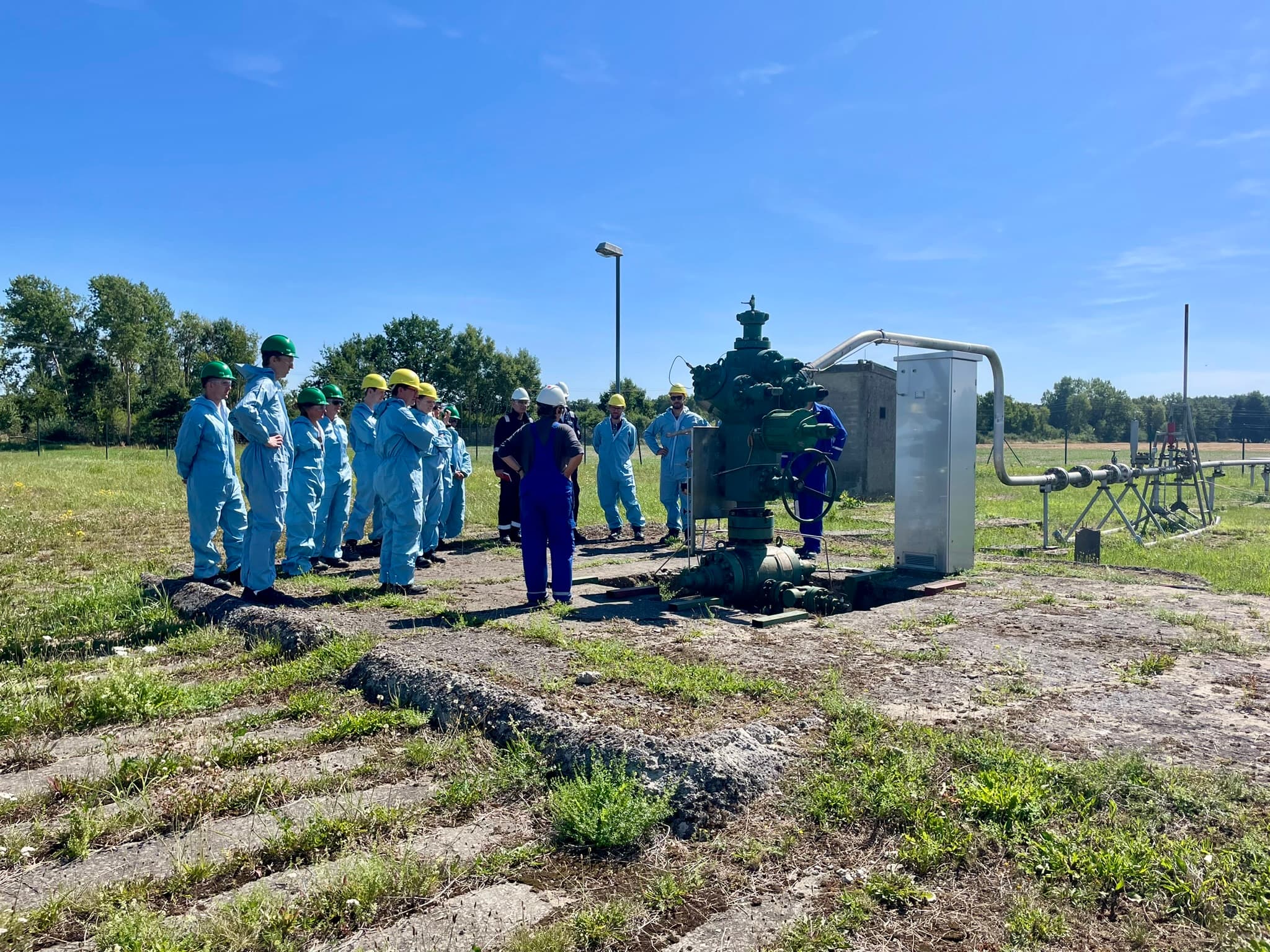
Peckensen field station at the Neptune site Steinitz: water from natural gas production is extracted here, which RoLiXX uses for its research. In the future, lithium-rich thermal water is to be obtained through dedicated water wells outside the gas field. — © Soyk/Neptune
Volcanic rocks in the Mammendorf quarry: RoLiXX is investigating whether the lithium in the thermal water originally comes from these volcanic rocks. The findings could help identify promising deposits of lithium-rich thermal water in other regions of northern Germany. — © Soyk/Neptune
Sampling at the Neptune site Steinitz: researchers from TU Berlin and GFZ examine deep water and mineral deposits from wells and facilities. The aim is to understand how these so-called "scales" form and to prevent disruptive deposits in the future. — © Regenspurg/GFZ